Indoor vs Outdoor
Same game, different physics. Why the two disciplines reward completely different athletes.
At a glance
| Indoor | Outdoor | |
|---|---|---|
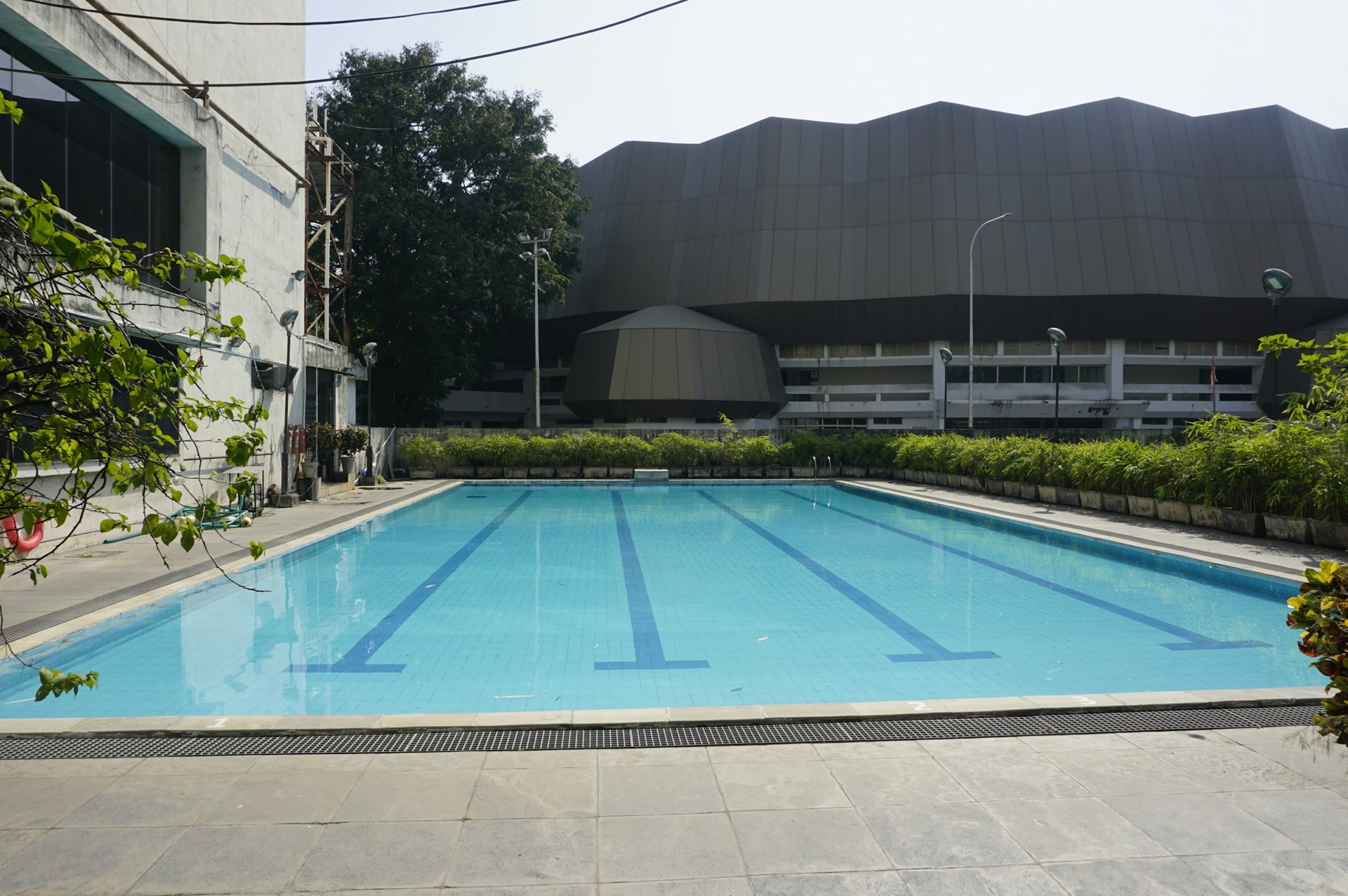
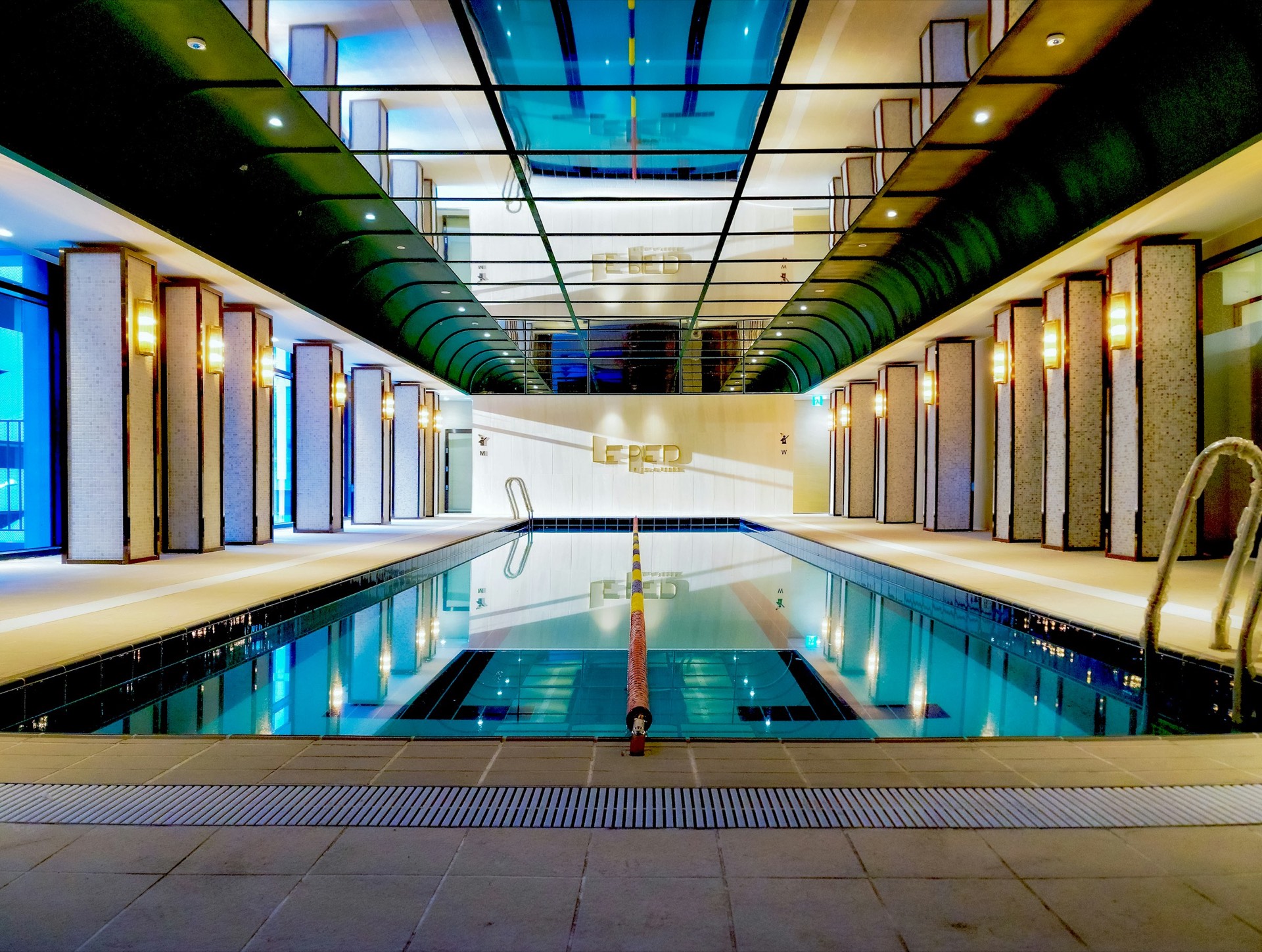
| Basin | 25.000 m × 12.500 m (312.5 m²) | 50.000 m × 21.000 m (1,050 m²) |
| Depth | 1.35–1.40 m | 1.35–1.40 m |
| Water temperature | 27.4 °C ± 0.2 °C | 24.0–29.5 °C |
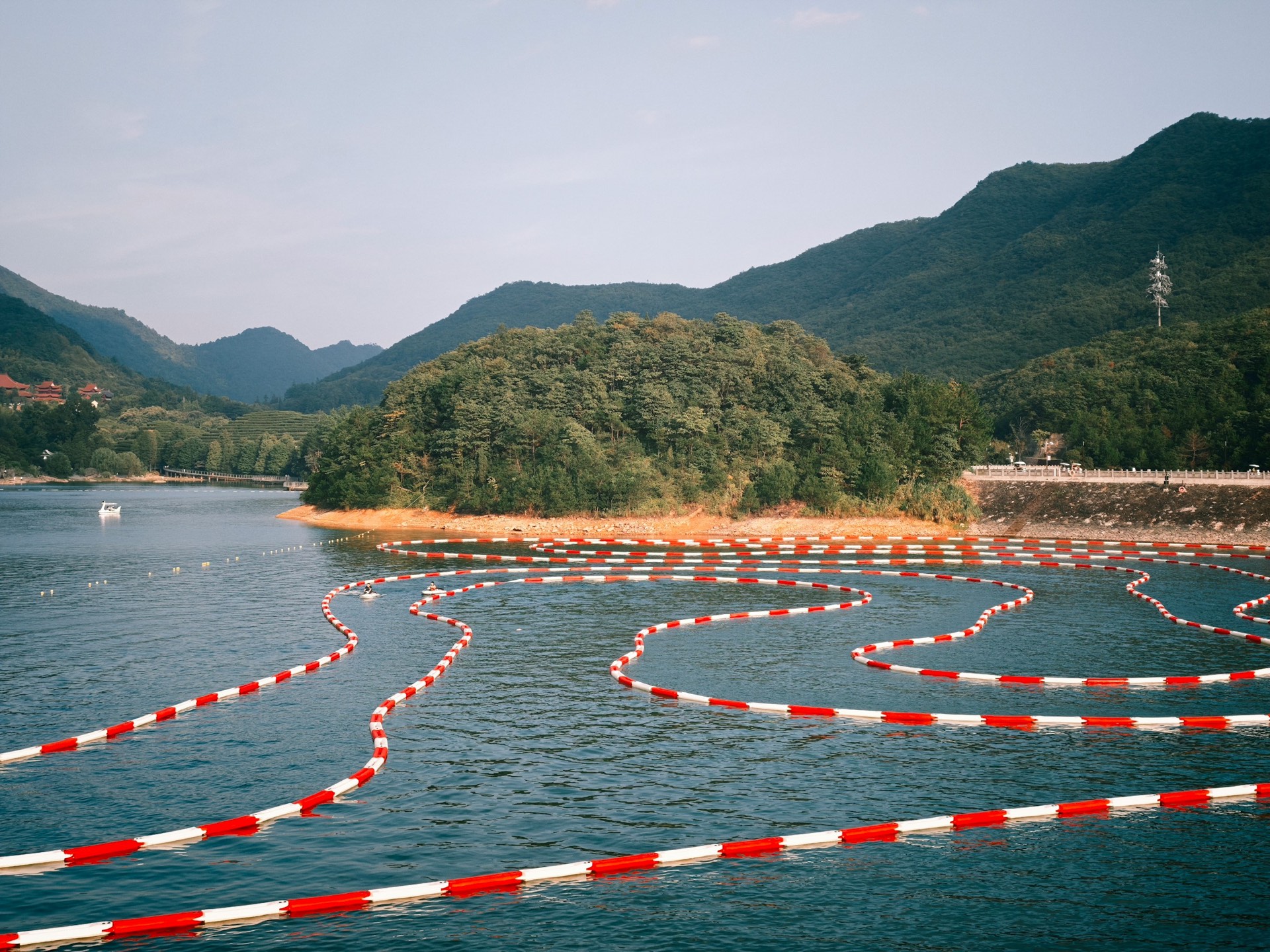
| Air | No more than 2 °C above the water; 55–65% humidity | Whatever the weather brings; wind limit 18 km/h |
| Background noise | Under 58 dBA, spectators silent during play | Wind, waves, birds and crowd |
| Sound environment | Reverberant hall: strong echoes | Near free field: almost no echoes |
| Nose clips | Permitted | Not permitted |
| Typical champion | Acoustic precision: short calls, accurate lunges | Endurance and evasion: quiet swimming, fast Polos |
Why there are two championships
Until 1968 there was one World Championship, held in whatever water the host had. Between 1951 and 1967 the water in finals ranged from 19.8 °C to 25.9 °C. The Great Chlorine Schism of 1968 split the sport in two, and the physics explains why that split has never been reversed: sound, heat and light behave so differently indoors and out that the two disciplines now reward different skills.
Sound in the air: how fast the Marco is heard
Sound travels through air at roughly 331.3 + 0.606 × T metres per second, where T is the air temperature in °C. In an indoor hall held just above 27.4 °C water, that is about 348 m/s. On a 20 °C outdoor morning it is about 343 m/s.
Across a 25-metre pool, a call reaches the far wall in about 72 milliseconds; across a 50-metre basin, in about 146. Both are tiny next to the 600 ms Polo window, so the speed of sound itself never decides a chukka. What decides it is everything that happens to the sound along the way.
Echoes: the indoor problem
A pool hall is one of the most reverberant rooms people build. Water, tile and glass reflect almost all the sound that hits them. The time it takes a sound to die away by 60 dB (the reverberation time, RT60) can be estimated with Sabine's formula, RT60 ≈ 0.161 × V / A, where V is the room volume in cubic metres and A is the total sound absorption. Big room, hard surfaces: long reverberation. Many swimming halls measure two seconds or more.
People work out where a sound comes from mainly by comparing their two ears: the difference in arrival time (up to about 0.6–0.7 ms for a human head) and the difference in loudness. The brain gives extra weight to the first sound to arrive, which is called the precedence effect, but in a long, loud reverberant field the reflections smear those cues. That is why indoor athletes favour short calls: a call that ends quickly lets the direct sound arrive before the strongest reflections pile on top of it.
This is the line from Bertrand Pélissou's clipped calls in 1968 to Aaron Warburton's 0.5–0.7-second calls in 2026.
Open air: the outdoor problem
Outdoors there are almost no walls to reflect sound, so a call behaves close to a point source in a free field. Its level falls by about 6 dB every time the distance doubles (the inverse-square law). A call that measures 80 dB at 1 m is about 54 dB at 20 m. That is still audible, but it is competing with wind, waves and spectators.
Wind matters more than most people expect. Wind is usually faster higher up than at the surface, which bends sound downward on the downwind side, so it carries further, and upward on the upwind side, which can create a quieter “shadow”. An evader upwind of the Marco hears the call less clearly, and the Marco hears their Polo better. This is part of why FIMP suspends play when the sustained wind passes 18 km/h.
Temperature does something similar. When the air just above the water is cooler than the air higher up (common in the evening), sound bends back down toward the surface and carries unusually far across the water. That effect is familiar to anyone who has heard a conversation from the other side of a lake.
Pitch: why some voices are easier to find
Typical adult speaking voices have a fundamental frequency of roughly 85–155 Hz (lower voices) to 165–255 Hz (higher voices), with harmonics far above that. The brain localises low frequencies mainly from timing differences between the ears and high frequencies mainly from loudness differences. Between about 1.5 and 3 kHz neither cue works especially well, and localisation is measurably worse.
Air absorbs high frequencies more than low ones, and humidity changes how much. Over the length of a pool the effect is small, but it means distant calls sound slightly duller than close ones, which experienced evaders use as a rough distance cue.
Under the surface
Sound travels about 4.3 times faster in water than in air: roughly 1,500 m/s in pool water, a little more in seawater. The ear is built for air, so underwater hearing relies largely on bone conduction, and the timing differences between the ears shrink by that same factor of about 4.3. As a result, people are poor at telling where an underwater sound comes from.
The water surface is also an acoustic wall. Because water is so much denser and stiffer than air, only about 0.1% of a sound's energy crosses from air into water. That is a loss of about 30 dB. A submerged evader can barely hear the Marco, which is why the Code limits submersion to 8 seconds and voids any Polo given underwater.
Heat: why 27.4 °C
Water conducts heat roughly 20 to 25 times better than air, so a body loses heat far faster in water than in air at the same temperature. Water that feels warm for a short swim gets cold over a long session, while much warmer water makes sustained effort uncomfortable. 27.4 °C sits inside the 25–28 °C band used for competitive swimming.
Outdoors, the sun warms the top layer of the water, wind cools it, and the temperature can change through a session. Cold water also makes muscles slower and shivering noisier. The Archive shows the result: across all championships since 1968, each 1 °C rise in water temperature is associated with about 3.5% fewer tags per chukka.
Wrinkled fingers
Fingers wrinkle after a few minutes in water, and this is not simply skin soaking up water. The wrinkling is driven by the nervous system: blood vessels under the skin constrict, and the effect does not happen in fingers whose nerves are damaged.
One theory is that wrinkles improve grip on wet objects, like tyre treads. One 2013 study found people handled wet objects faster with wrinkled fingers; a 2014 study found no difference. The evidence is mixed. FIMP's Fingertip Wrinkle Index uses wrinkling only as a fatigue marker, and Outdoor athletes, in cooler and more changeable water, record higher readings: an average of 6.4 against 5.5 Indoors since 2023.
Light: why eyes closed is not enough outdoors
Closed eyelids are not opaque. They let through a small fraction of light, most of it at the red end of the spectrum, which is why the world looks red with your eyes shut in sunshine. Outdoors, a Marco with closed eyes can sense where the sun is and even notice a shadow passing over their face.
This is why FIMP requires Category-5 blackout goggles in every final, and why the rule was tested so hard in Outdoor events before it was adopted.
The water itself
Seawater is about 2.5% denser than fresh water, so athletes float slightly higher in it, with more of the head (and the ears) above the surface. Natural venues also bring chop, which adds broadband noise and keeps moving every athlete's position.
Indoors, the sharp “pool smell” and red eyes come mostly from chloramines (chlorine combined with sweat and other organic matter), not from free chlorine itself. FIMP regulates free chlorine at 1.0–3.0 ppm and requires wave-damping gutters, because smooth water is quiet water.
What the Archive shows
The FIMP Archive compares the two disciplines over every championship since the split. These figures are calculated directly from the championship records.
| Since 1968 | Indoor | Outdoor |
|---|---|---|
| Championships | 58 | 58 |
| Mean water temperature | 27.49 °C | 25.96 °C |
| Tags per chukka | 2.69 | 2.82 |
| Mean Evasion Seconds | 116.1 s | 116.0 s |
| Mean Polo Response Latency (2003–) | 485 ms | 483 ms |
| Mean Bearing Error (2011–) | 18.0° | 17.9° |
| Mean Fingertip Wrinkle Index (2023–) | 5.5 | 6.4 |
| Mean spectators | 5,686 | 5,926 |
The physics and physiology on this page reflect published science. Championship figures come from the FIMP Archive.